

Scientists Turn Live Snail Into A Battery
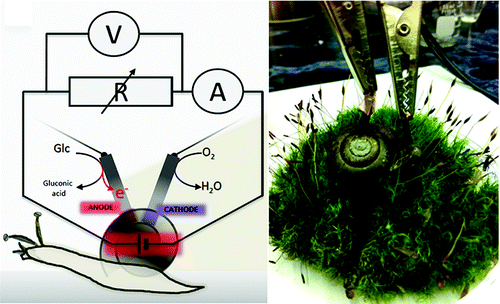
A team of researchers from Clarkson University, New York and Ben-Gurion University, Israel have turned a snail into a cybernetic power generator. Probably one of the more rapid-moving stories involving such a creature.
Human Heart Replaced By Pump. The Medical Miracle With No Pulse
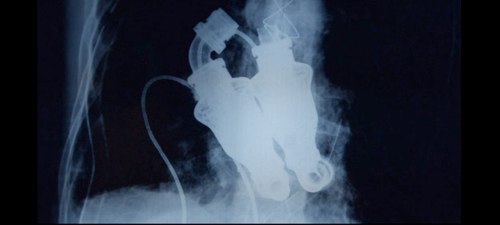
On the exterior, he is living a normal healthy life; but patient Craig Lewis doesn't have a heart beat. To all intents and purposes he is, by all medical standards, dead. The 10,000rpm artificial turbine in his chest contradicts this though.
Researchers Build 'SpeechJammer' To Mute The Human Voice
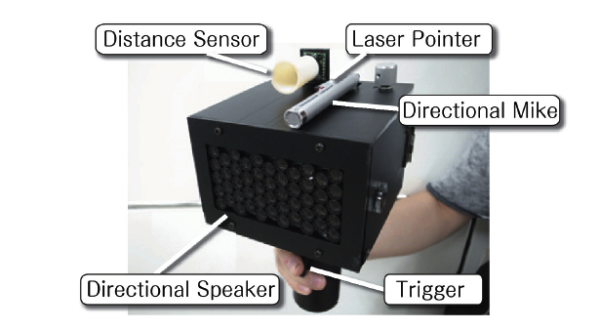
Japanese researchers have created a device to perpetuate the definition of "silence is golden," by remotely cutting off human speech without any physical discomfort or intervention. So with what looks like a handheld speed camera, you can literally mute a person: a piece of technology many of us here wish we can acquire.
SETI Live Crowdsources The Search For Extra Terrestrials
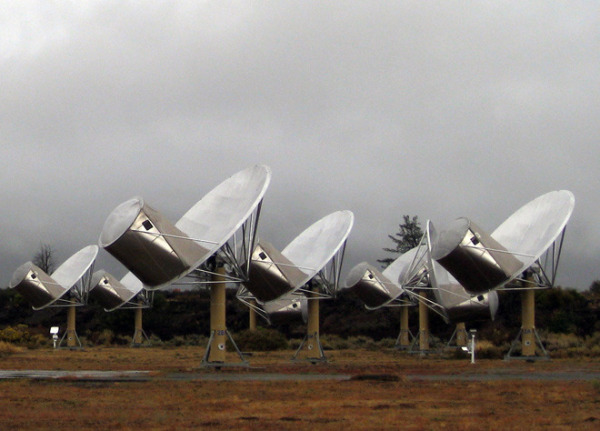
The Search for Extraterrestrial Intelligence needs your help, in a rather novel online concept called the 'SETI Live' program, allowing you to examine radio waves for alien activity.
The free-to-use service presents users from around the world with a series of radio frequency signals, which were gathered by the recently restarted Allen Telescope Array (ATA), that emanate from the Kepler field. They've picked this field in particular because it's gathered significant traction of attention recently, as a series of earth-like planets that could support life have been spotted there.
A 'Back To The Future' Hoverboard That Actually Hovers
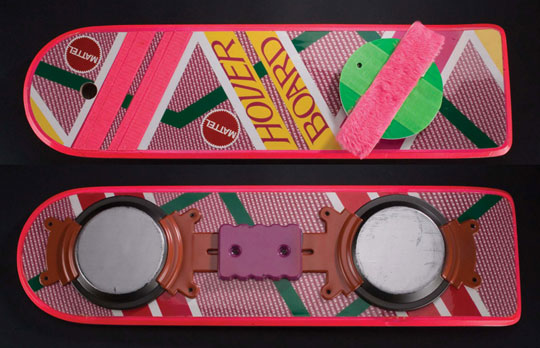
So not too long ago, Mattel officially announced the release of their hoverboard which featured in Back to the Future II, giving many-a-nerd such as myself a profound sense of pride. Not so impressed that it doesn't actually hover though; but that's where one genius has brought us closer to the realisation of our dream.
Study Shows Mobile Phone Use Makes You Selfish

The technology may have granted the public the ability to communicate with thre rest of the world in a way that's not been possible; but it turns out that very technology could be making us close off from the world. A study by the University of Maryland has found that people after using their phones are more likely to engage in behaviour that would soully benefit themselves and not others, than those who didn't, or just used Facebook instead.
NASA Budget Highlights

Last Monday NASA held a conference call to go over their budget for the 2013 fiscal year. The conference call, attended by members of the press and prominent Twitter users, inadvertently managed to highlight just how much trouble NASA is in.
In the midst of trying to put a positive spin on recent budget cuts and unrealistic Congressional mandates NASA officials awkwardly tried to engage with social media (the communications director opened the program by Tweeting a grainy photo of the attendees) and paint a rosy picture of what is going on with the federal agency; all the while managing to perfectly illustrate what is wrong with the American space program today.
Scientists Develop Crab-Like Robot To Remove Stomach Cancer
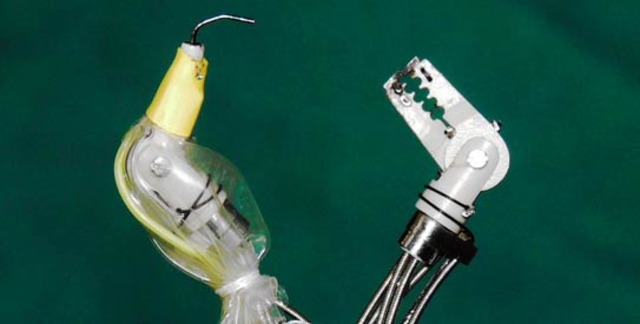
Scientists have designed and created a miniature crab-like robot - complete with pincers and hook - that can remove early-stage stomach cancers without leaving any scars. With the help of the robot, like-for-like surgery time is cut significantly, while its use is also said to reduce much of the risk typically associated with keyhole surgery, where the risk of infection is much higher.
Record-Breaking Freefall Pioneers Spacesuit Technology

While Red Bull are looking to break the record for the highest freefall time and distance, via jumping from the edge of space, the dedicated Stratos team have also made a huge scientific contribution to the creation of spacesuits by making their own custom version, with some innovative technology.
Could Remote-Controlled Cyborg Insects Be Used As Spies?

Forget micro camera systems, insanely-compact audio surveillance devices and night-vision goggles – scientists at the Massachusetts Institute of Technology are currently researching a probe that can be implanted into moths to control their flight, alluding to the possibility of insects being used in the future as spies. Though it's the US Defense Advanced Research Projects Agency (DARPA) that has invested heavily in a programme to develop 'machine-insect interfaces' for years, Joel Voldman and colleagues of MIT have collaborated to design a unique, flexible neural probe that attaches directly to an insect's ventral nerve cord (VNC) which, alongside the brain, makes up the central nervous system.
NASA Ready To Invest In 'Space Taxis' To The Tune Of $500m
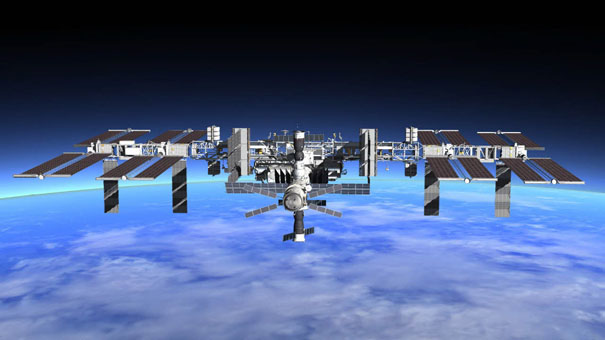
What with Russia having now monopolised the flying of space crews to the $100 billion International Space Station, NASA is now looking to invest in at least two U.S. firms to design and build what they’re calling ‘space taxis’ to transport astronauts to and from the space station. Russia, it is reported, currently charges around $60 million per person for the privilege.
Newly Discovered Super-Earth Is 'Best Candidate' For Supporting Life

22 light years away, you'll find a planet which has been given the categorically dull name of GJ 667 Cc, or as it's being synonymously named: The 'super-Earth.' The planet, orbiting a nearby star, has been detected and analysed, with findings giving a solid prediction that it may support life and human inhabitance.
How Neuroscience Might Define A New Age Of Warfare
 In what sounds only fit for the pages of a high-concept Tom Clancy novel, experts have speculated on what shape the future of military conflict might take if current advances in neuroscience continue to break new ground. Experts revealed how it might be possible to direct energy weapons that use wave beams to cause pain and distress to its target, pilot drone aircraft directly with the human brain, or use ‘electrical brain stimulation’ to boost a solider’s combat abilities. They also divulged how advances made in neuroimaging could potentially be used by military recruitment officers to ‘screen’ hopefuls with only the most desirable of attributes.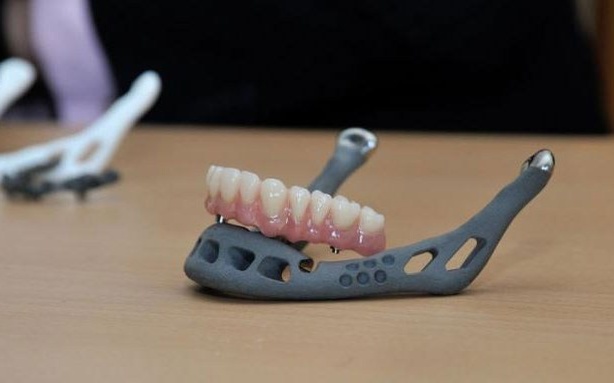
3D-Printed Lower Jaw Used In Jaw Transplant Surgery
Showing the technology is not just limited to producing physical 3D models of your in-game avatar or other worldly creations – as our look at Mineways delves into; recreating your favourite Minecraft builds into model form – 3D printing continues to astound us in its real-world applications. Now, said to be the first operation of its kind, doctors in the Netherlands have successfully completed an 84-year old woman's jaw transplant by replacing her existing lower jaw - said to be inflicted with chronic bone infection - with a patient-specific, 3D-printed, titanium-based replacement.
Scientists Researching A Drug That Will Keep You Sober

Like the regular twenty-somethings we are, we have to admit we're not averse to the odd night out on the town. But if there's one down side to getting merry on the juice, like any binge drinker will tell you, it's the dreaded hangover the next day that makes it all seem pointless, ill thought out, superficial if you will – besides the notes in your wallet somehow miraculously disappearing in the night.
'Nuclear-Thermal Propulsion' And 'Fission Power Generation' Tech Amongst NASA's 5-Year Research Wish List
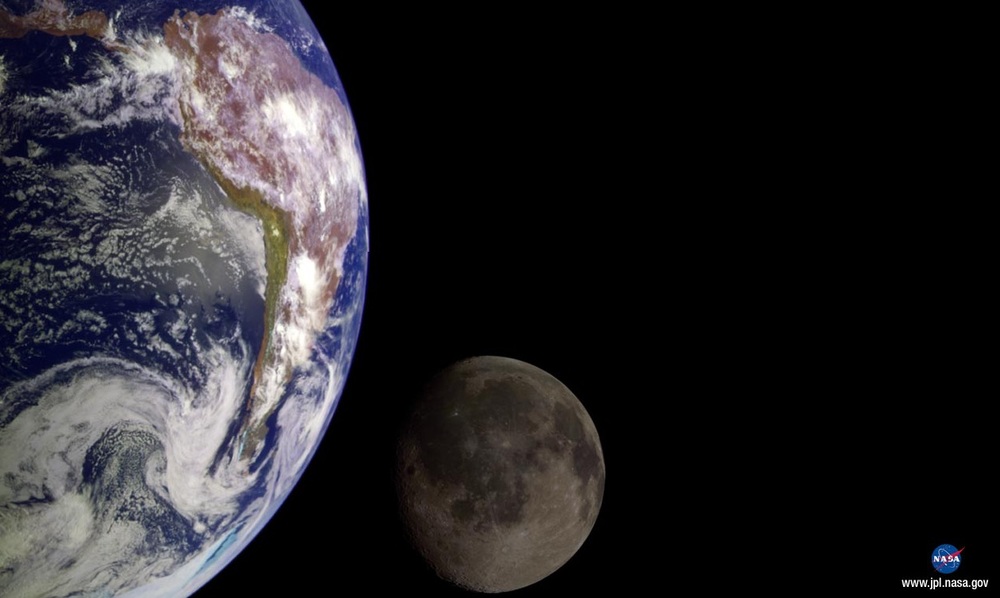
The researching of technologies including radiation mitigation, solar power generation, extreme terrain mobility and nuclear-thermal propulsion might not be the first items that come to mind when thinking of your usual wish-list. But that's exactly the sort of technology listed in a new report conducted and published by the National Research Council for the National Aeronautics and Space Administration (NASA) that it says the organisation must prioritise in research over the next five years if it's to achieve its ground-breaking, long-term priorities and goals. The technologies make up a small part of the 16 high-priority technologies outlined in the report.