

'Explore The Galaxy' From The Comfort Of Your Internet Browser
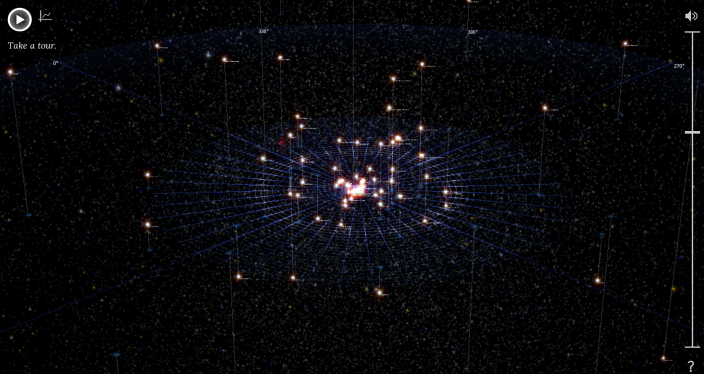
As a continued testament to the power of current generation web technologies, a Chrome-experiment dubbed ‘100,000 Stars’ lets you explore our local cluster and the Milky Way beyond, all from the comfort of your browser.
Jellyfish-Inspired Microchip Captures Cancer Out Of The Bloodstream
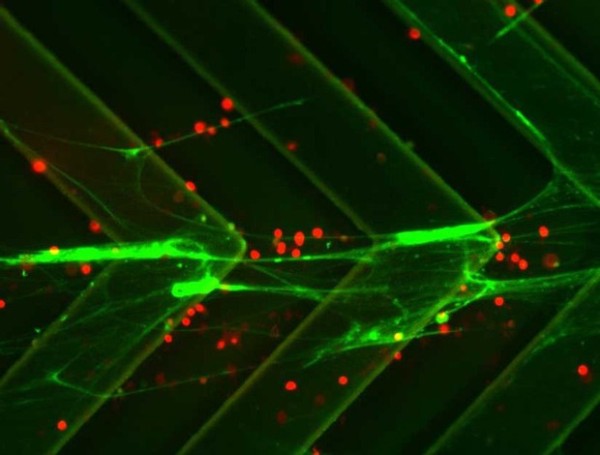
A team of researchers have drawn inspiration from the Jellyfish to design a microchip coated with DNA tentacles, which can capture cancerous cells in the bloodstream and provide a new way of combatting this disease in patients.
Scientists Identify Hormone To Lead The Way To Next-Gen Biofuels

Scientists at the University of Manchester have identified a hormone that can increase cell division in vascular tissue in plants. It's a development that has already proved to increase the plants biomass, and one which may lead into creating the next generation of biofuels.
Stanford Scientists Develop Pressure-Sensitive, Self-Healing 'E-Skin'
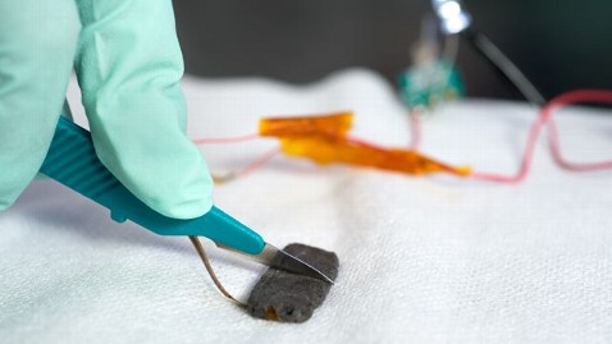
While work continues to be carried out on material that could ‘bruise’ to signal levels of damage (posing a future where the iPhone distorts in colour as wear and tear occurs), chemists and engineers at Stanford say they are on their way to developing a new ‘e-skin’ synthetic material that is not only sensitive to the touch, but also self-healing.
University Researchers Use Xbox Kinect To Control Lasers
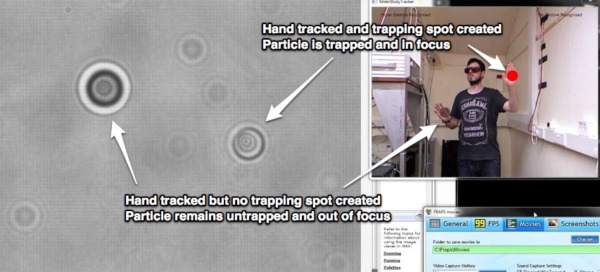
Researchers at the University of Dundee have used the Xbox 360 Kinect sensor to control optical tweezers, a set of laser beams used to manipulate particles.
Physicists control the particles through their body movements, which are read by a Kinect-based interface called "HoloHands." While not completely perfect yet, with a latency issue and the occasional misinterpration of the user's movements, the interface has been quite successfully tested moving silica particles.
The Pursuit To Make The Body A Power Source Moves To The Ear
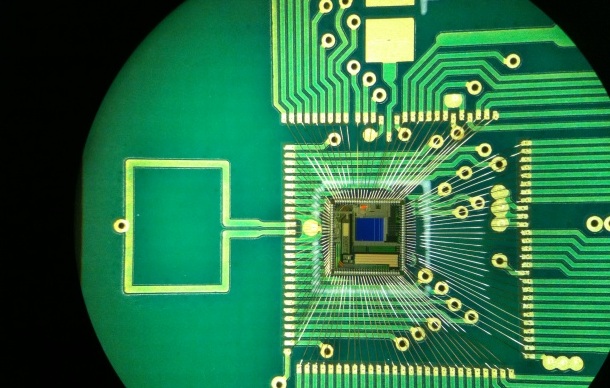
While medical implants have been getting smaller and more efficient over the year, the batteries used to power them have not. Making them too small, however, severely reduces the expectant battery life and thus ups the likelihood of surgery to replace them. We can’t just cut out and eject power packs Terminator-style, so researchers have been looking at ways the human body could power the devices, and one such way is with our ears.
UK To Invest £60m More In Space Program
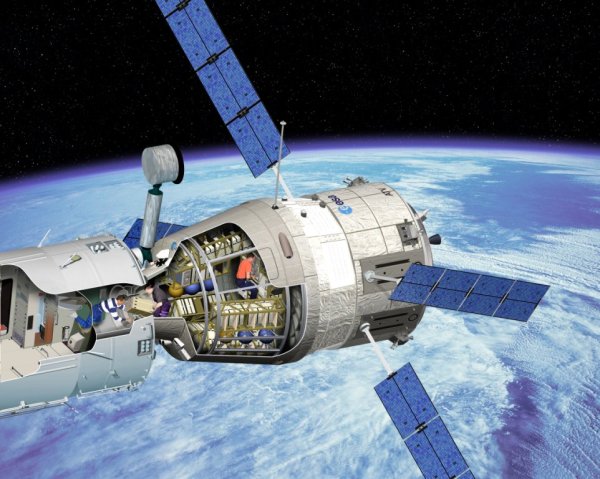
Britain intends to spend an extra £60 million per year on space technology, by increasing it's investment into the European Space Agency (ESA).
The Chancellor George Osborne, in a speech to the Royal Society, announced that the UK is willing to commit an average of £240m a year, over the next five years to the ESA, increased from the usual investment of £170m. This has been done in the hope of encouraging domestic job growth via attracting lucrative contracts.
Habitable Super-Earth Found In A Solar System 44 Light-Years Away
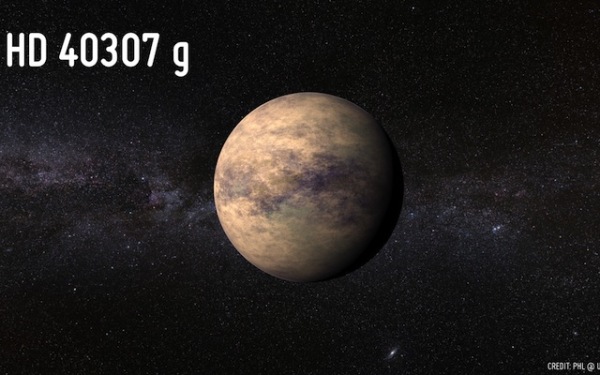
Astronomers have discovered a new Super-Earth, which could have the same climate as our planet and have the ability to support life.
Neil deGrasse Tyson Locates Superman's Home Planet

Famed American astrophysicist and much-idolised geek hero Neil deGrasse Tyson has pinpointed a very real location in our own universe for Superman's home planet. No, really.
Radioactive Orchestra. Nuclear Musicians Turn Gamma Radiation Into Song
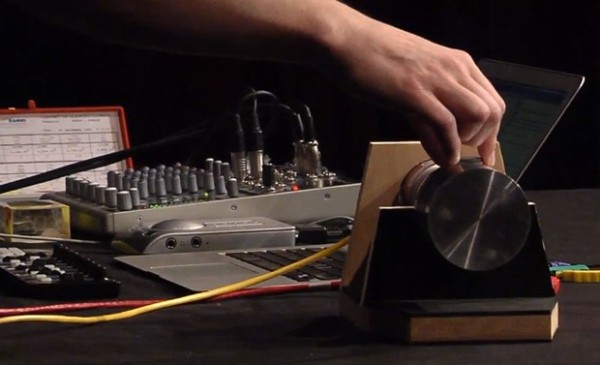
Sweden's Kollektivet Livet began working on Radioactive Orchestra last year, turning isotopes into beats and beeps for all of us to hear in recordings. However, version 2.0 of the project is taking the show on the road, making sweet photonic melodies through a live instrument prototype.
Our Own Heartbeat Could Power Future Pacemakers

We've already seen scientists propose harnessing glucose within the human body could power self-sufficient medical implants, now scientists have proved our own heart beat could generate enough electricity to power pacemakers.
Humans And Rats Interact Via Virtual Reality 'Beaming' Experiment
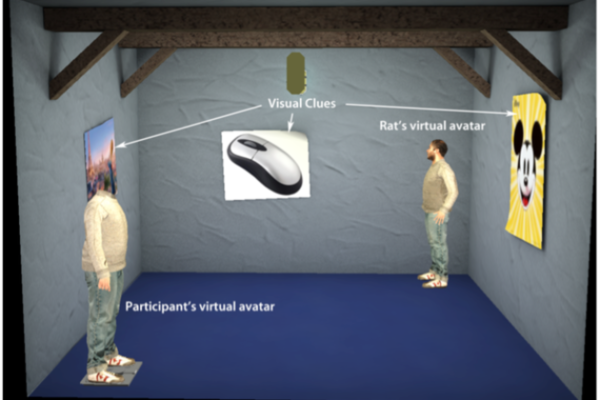
Researchers at University College London (UCL) and the University of Barcelona have built a virtual reality system that allows for humans and rats to interact. These cross-species meetings have tested a process known as 'beaming' in which people take control of digital representations of themselves to carry out virtual interactions. Think Avatar; but with rats.
Psychics Fail 'Halloween Test' At Goldsmiths

It may or may not come as a surprise to you depending on your gullibility for such phenomena, but in a scientific test designed and conducted at Goldsmiths, University of London, two mediums have failed to prove the existence of psychic abilities.
New Eye Test Can Detect Schizophrenia With "Exceptional Accuracy"
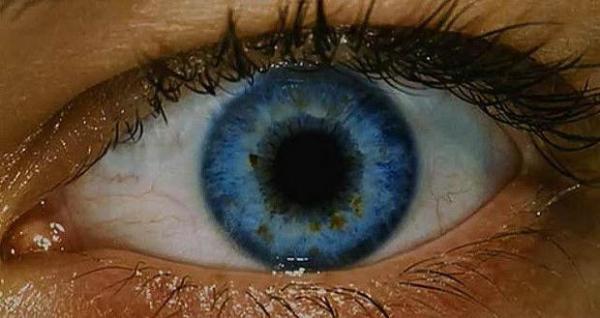
In Macbeth, King Duncan once famously said "There is no art to find the minds construction in the face" researchers from Aberdeen University would have to respectfully disagree, as they have developed a method of determining mental illness, specifically schizophrenia, from a person's eyes.
Scientists Find A Way To Decipher Dreams With Brain Scans

At the ATR Computational Neuroscience labs in Kyoto a team lead by Yukiyasu Kamitani have started to develop a method of scanning a person’s mind whilst they sleep to determine what they are dreaming about. Using functional neuro-imaging to scan and record the brain waves of three individuals’ brains with an electroencephalography (EEG) machine, they have started to build up a baseline of what the person is actually dreaming.
Scientists Propose Sending Boat-Like Probe To Saturn Moon ‘Titan’
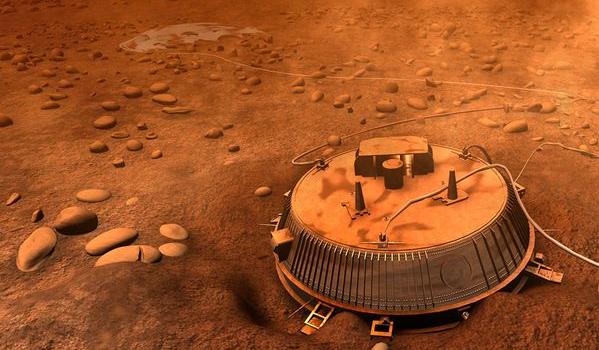
Forget the Curiosity Rover currently trekking Martian plains for a second; because scientists are thinking even further afield. Namely, focussed on Saturn’s moon ‘Titan’, the only moon in our solar system to have a thick atmosphere, and one located at least 1.2 billion km from Earth.
British Scientists Produce Petrol From Fresh Air
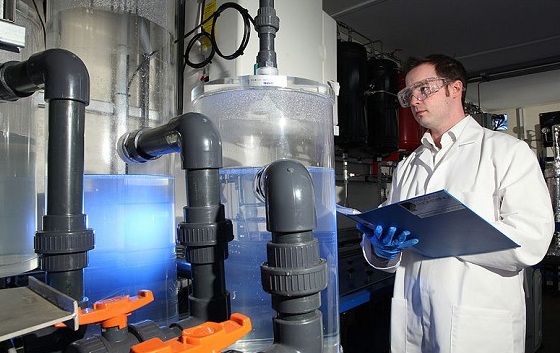
In no uncertain terms, this could be huge. In what could be a 'game-changer' for the global energy crisis and a step on the way to combating global warming, a small team of scientists from a company in the North-East of England have developed an 'air capture' technology that can produce synthetic petrol using little more than air and electricity.

Astronomers Unearth Planet In Nearest Star System To Earth
Becoming the closest confirmed ‘exoplanet’ in a wider US-European competition to find the nearest and most Earth-like planets outside our own solar system, astronomers at ESO’s La Silla Observatory in Chile have made a remarkable discovery.
'The Falcon Project' Hopes To Capture Definitive Proof Of Bigfoot

Not to be confused with DARPA’s project of the same name to develop a Hypersonic Weapon System (HWS), ‘The Falcon Project’ is a one of the more preposterous scientific ‘studies’ ever green-lit. Set to utilise a state-of-the-art, remote-controlled, camera-equipped airship, the project is hoping to find definitive proof that ‘Bigfoot’ exists.
The Tech Behind Red Bull Stratos And The Death-Defying Leap From The Edge Of Space
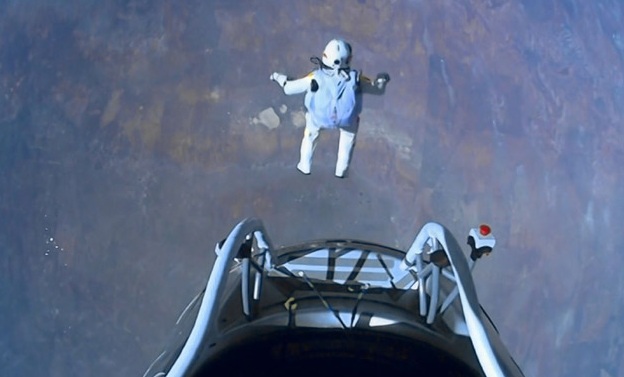
Sixty-five years to the day since Captain Charles Yeager became the first man to travel past the speed of sound, Felix Baumgartner yesterday became the only living man to ever break the sound barrier without a spacecraft. Logistically, the Red Bull Stratos mission is a feat in of itself, though it’s the technology behind it that made this particular jump so fascinating.